How to Build an AI Co-Author Workflow to Streamline Content Creation & Boost Productivity

Understanding the Need for an AI Co-Author
Picture this: You’re on the brink of inspiration, and yet, every time you sit down to write, the blank page stares back at you, unfazed. You know you have ideas buzzing in your head, but life’s distractions pull you in ten different directions. That’s where the concept of an AI co-author comes into play—acting as that reliable writing partner who’s always there to lend a hand when motivation falters.
In recent years, the writing landscape has evolved with technology lending its prowess to creative processes. The prospect of an AI assisting in content creation isn’t about replacing the human touch, but rather about enhancing it. This collaboration can empower writers to streamline workflows, inspiring creativity and productivity simultaneously.
Establishing Clear Objectives
The first step in crafting your AI co-author workflow is to establish clear objectives. What do you want to achieve? Are you aiming to produce more articles per week, refine your writing style, or perhaps explore new niches? Maybe you’re juggling several clients and need a system that allows you to remain agile and effective.
For example, consider a freelance copywriter working in diverse niches: they might set a goal to produce two high-quality articles each week, utilizing AI to assist in data gathering and idea generation. By creating a framework for what they want from their co-author, they’re laying the groundwork for a more productive relationship.
Selecting the Right Tools
With your objectives pinned down, it’s time to pick the right tools. The market’s flooded with AI writing tools, each boasting unique features. Tools like Jasper, Writesonic, or Copy.ai come highly recommended, but it’s essential to test them out to see which resonates with your writing style and needs.
Don’t shy away from experimenting. For instance, one blogger might prefer a tool that’s exceptional at generating headlines, while another writer seeks functionality in drafting entire blog posts. Finding the right fit will make the collaboration more seamless. Take your time, and remember—there’s no one-size-fits-all solution.
Creating a Workflow
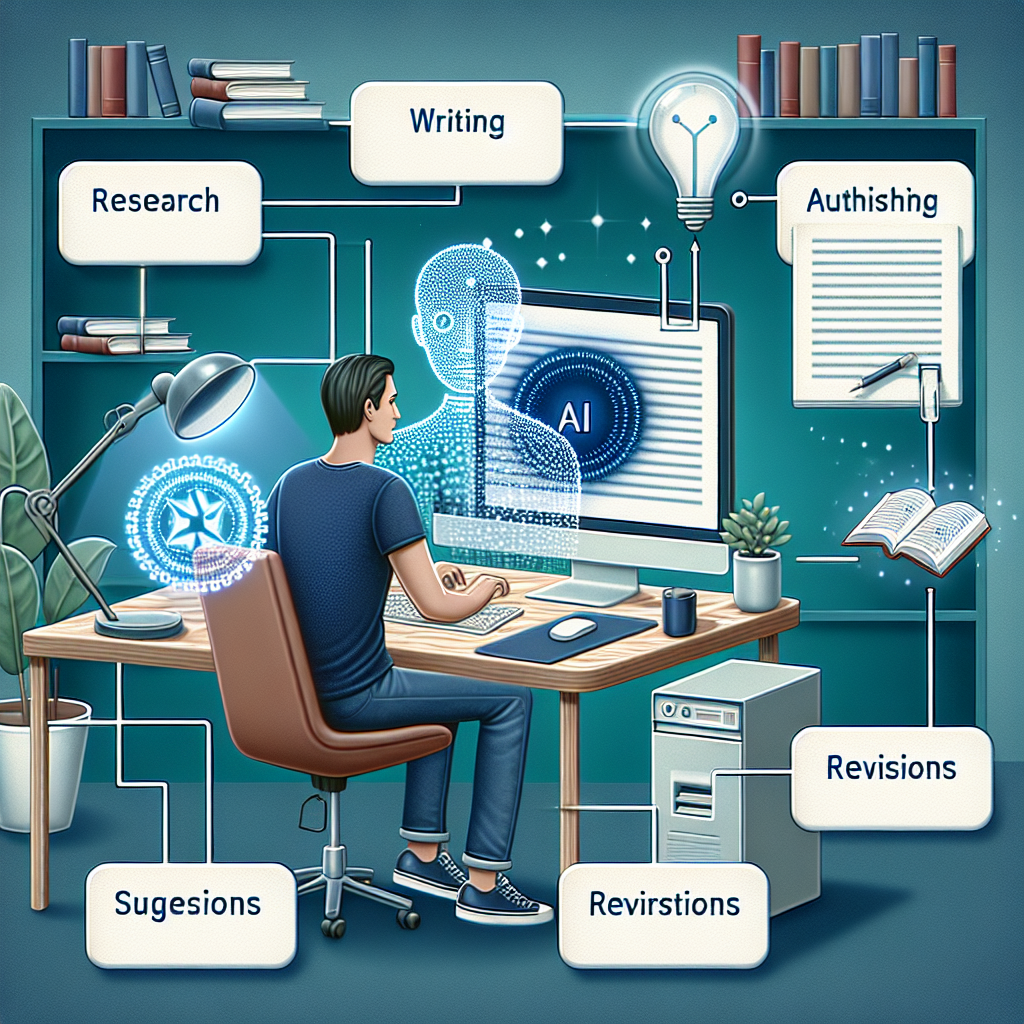
Now that you’ve got your objectives and tools in place, it’s time to build a workflow that feels natural. Start with outlining your content. Use your AI tool to help brainstorm themes, subtopics, and key points that need covering. This can prevent the infamous writer’s block from rearing its ugly head.
Next, draft your content. Here’s where the AI co-author truly shines. You might take a chunk of your outline and hand it over to your AI, asking it to flesh out the initial draft based on your guidelines. In practice, this could look like writing a paragraph about sustainability, enriching it with the AI’s added research or relevant statistics. However, don’t forget that the final polish is yours; go over what’s generated, and let your voice emerge.
Iteration is Key
A significant aspect of harnessing an AI co-author is learning to embrace iteration. Your first draft might not be perfect—and that’s okay! After generating a draft, take the time to refine and shape it. Sometimes the AI might provide valid points, but human intuition will always carry nuance. A case in point is the experiences shared by various authors who found that revisions brought their content to life, revealing new angles they hadn’t initially considered.
Feedback Loops and Continuous Improvement
Establishing feedback loops can propel your content quality to the next level. Use analytics to determine which of your posts spark engagement, and examine the AI’s contributions. Were they impactful, or did they miss the mark? This sort of analysis sharpens your understanding of how to engage your audience while honing your AI’s contributions over time.
Let’s say you published three articles with varying degrees of interaction. Analyzing reader feedback will help you pinpoint what worked and what didn’t. In turn, you can adjust how you instruct your AI in future drafts—fine-tuning its responses to better align with audience preferences.
Maintaining a Personal Touch
Ultimately, despite the support and efficiency an AI co-author provides, the essence of your content must remain authentic. Readers are drawn to stories, experiences, and real human connections, so strive to infuse your unique voice into everything you publish. Perhaps share a personal anecdote that relates closely to the topic at hand, as it allows your audience to connect on a deeper level.
The key lies in striking the right balance. Your AI might help craft the skeletal structure, but to truly resonate with readers, the heart of your narrative must always come from you.
Your Unique Workflow
Integrating an AI co-author into your writing process is less about the tool itself and more about how you leverage its capabilities. Your workflow can act as a blueprint, but adapt it as you go; what works today might need tweaking tomorrow. Experimentation yields invaluable insights, morphing your approach into one that’s uniquely yours.
As you embark on this journey, remember that the goal is to enhance, not diminish, your creative input. Embrace the new dynamics at play and watch your productivity—and perhaps even your inspiration—soar.