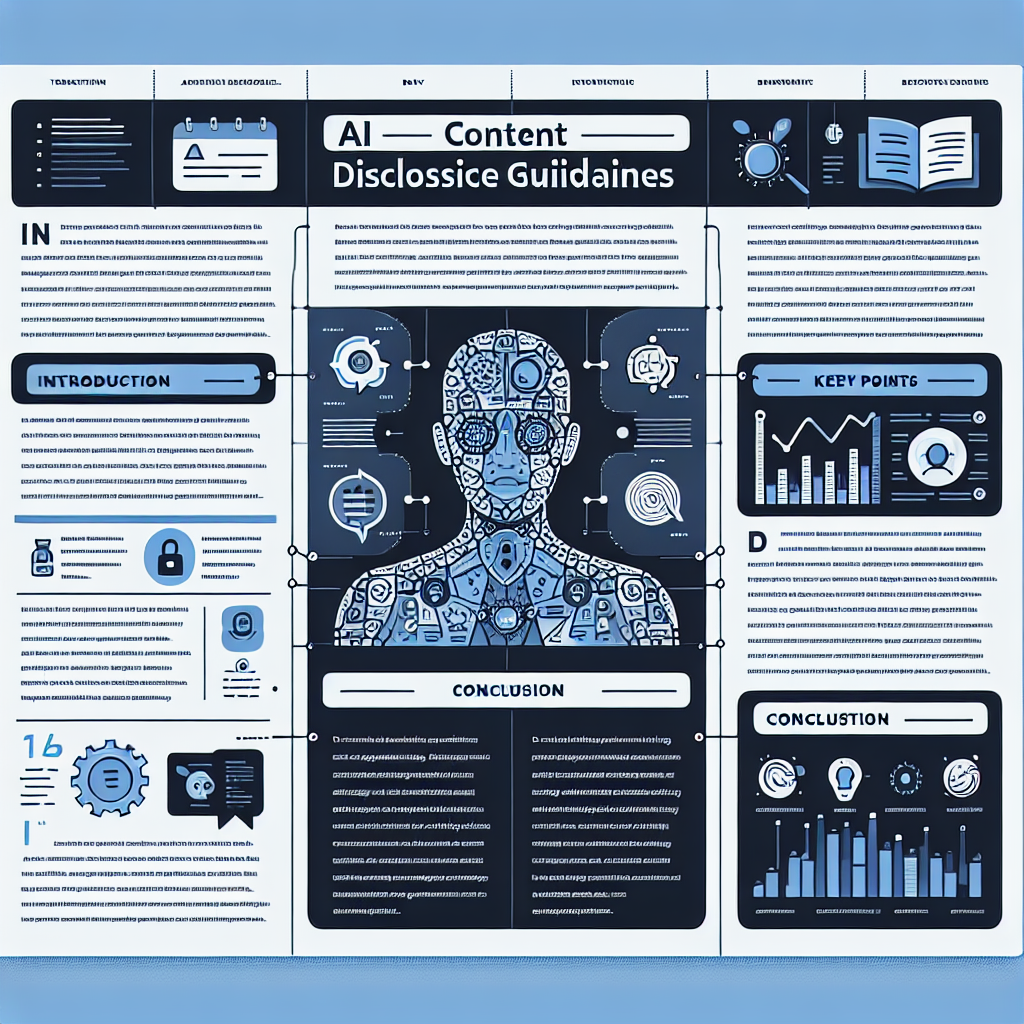
AI Content Disclosure Guidelines: Best Practices & Tips

Understanding Content Disclosure in AI
In an era where content creation increasingly involves artificial intelligence, transparency about how this content is generated has become crucial. If you’ve ever found yourself reading an article only to question its origins, you’re not alone. Recently, I stumbled upon a piece online that claimed to offer financial advice, but the sterile language and lack of personal anecdotes left me wondering—who, or what, authored this? This experience sparked my curiosity about the importance of content disclosure and the ethical considerations that come along with it.
Why Transparency Matters
In today’s world, authenticity is a gold standard that content creators must meet. If a reader feels misled about the source of information, it can lead to a breakdown of trust—not just with that piece, but with the medium as a whole. Consider the backlash that occurs when a celebrity is found to have faked their social media engagement. That crisis of confidence can tarnish their reputation for years.
Moreover, when it comes to sensitive topics, like health or finance, the potential for harm increases dramatically. For instance, a study by the Pew Research Center found that nearly 70% of adults believe it’s important for writers to disclose if they’re using AI to generate their content. Even a simple note indicating AI involvement can set the stage for a more informed and trusting exchange between creator and audience.
Best Practices for Content Disclosure
Implementing effective disclosure strategies doesn’t have to be complicated. Let’s explore some best practices that can help maintain credibility and establish a solid rapport with your audience.
1. Be Clear and Direct
Don’t leave your audience guessing about how the content was generated. A straightforward statement at the beginning or end of your post can serve as a helpful guide. For example, consider a disclosure like this: “This article was generated using AI technology, with human editing for clarity and accuracy.” Not only does this inform the reader, but it also emphasizes your commitment to quality.
2. Explain the AI’s Role
Instead of simply stating that AI was involved, go one step further and explain what that involvement entailed. Did AI generate the entire article, or just suggest topics and outlines? If I were to compare it to cooking, AI might provide the recipe, but you’re the one adding the spices and making sure it tastes right.
3. Emphasize Human Collaboration
Make it clear that there’s a human touch in the final output. By acknowledging the synergy between AI and human input, you can help demystify the process. Perhaps share a brief personal account of how you interacted with the technology. For instance, “I asked the AI to brainstorm ideas for this article, but ultimately, the direction and tone are entirely mine.” This kind of insight not only clarifies the role of technology but also showcases your skill as a creator.
Real-World Examples of Disclosure
There are organizations leading the charge on content disclosure, and we can learn a lot from their approaches. Take OpenAI, for instance; they provide detailed documentation on how their models work and the types of use cases that comply with ethical guidelines. Similarly, The Guardian recently took the initiative to label content created with AI in specific sections of their website, reassuring readers that they’re committed to transparency and accountability.
In contrast, there are platforms that have faced criticism for failing to disclose AI involvement adequately. Missing an opportunity to clarify can create distrust and reputational damage, as seen with various marketing firms that erroneously presented AI-generated content as human-created. This is a cautionary tale for anyone in content creation: clarity yields trust.
Future of Content Disclosure
As AI continues to evolve, the conversation around content disclosure will likely become even more nuanced. It’s essential to consider how advancements in technology will influence audience expectations. For example, as readers become more educated about AI capabilities, they might demand even more transparency regarding the processes behind the content they consume.
Imagine a future where consumers could not only learn about the involvement of AI but could also delve deeper into the training data and sources it relied upon. While this may sound ambitious, it’s that level of transparency that could set new industry standards.
With evolving technologies come evolving responsibilities. As creators, writers, and marketers, ensuring that we’re clear about our methods fosters a culture of honesty and credibility. No one wants to feel like they’re living in a sci-fi world where the lines between human and machine are blurred. Let’s keep those channels open and honest. After all, informed readers make for better communities, and a commitment to transparency is a cornerstone of that.